The Ship That Reached Samsun
A weathered steamer eases toward a war-scarred shore at dawn — aboard is a general carrying a mission he intends to defy from the moment he steps off the gangway.
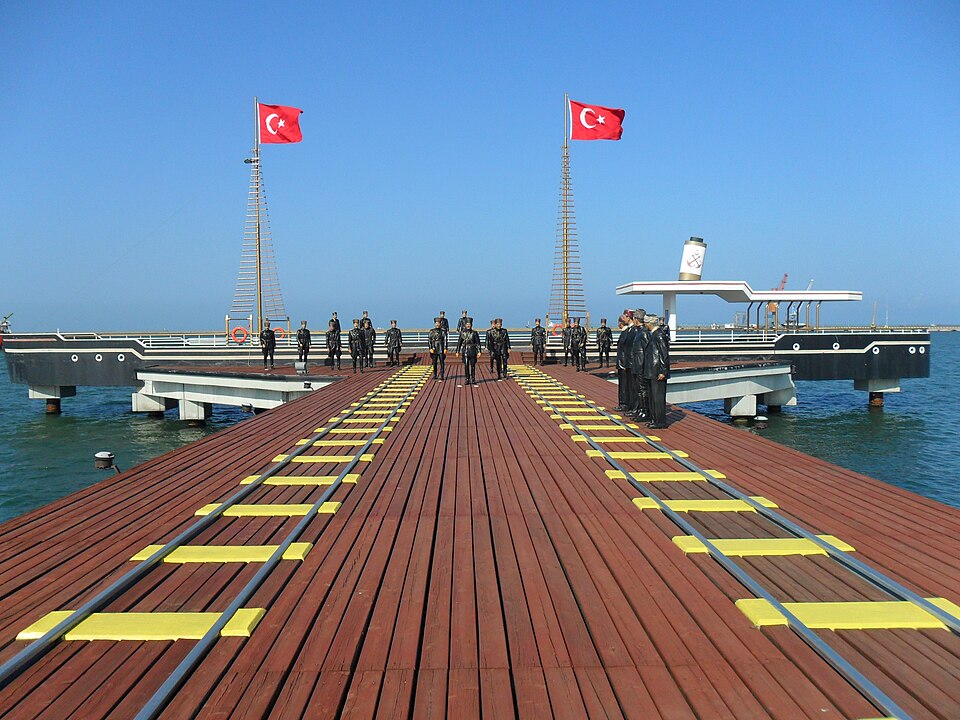
Before sunrise on 19 May 1919, the Bandırma Vapuru cuts through the last stretch of the Black Sea toward Samsun's harbor. Its passenger, Mustafa Kemal, has been at sea for days, sent by the Ottoman government to quell clashes between Greek and Turkish residents in the region — a task granted to him only after the sultan's ministers, Harbiye Nazırı Abuk Ahmed Paşa and Sadrazam Damad Ferid Paşa, judged him fit for it. He carries the title of 9th Army Inspector, a rank that, thanks to a decree he helped draft himself, allows him to command corps commanders from Diyarbakır to Kastamonu.
The Ottoman Empire he sails toward is a shattered one. Defeated in the First World War and bound by the Mondros Armistice, it has already ceded control of its straits, its resources, and its army to the Allied powers. British soldiers have landed in Samsun itself, along with Urfa, Maraş, Antep, and Merzifon; French troops hold Adana; Italians sit in Antalya and Konya; Greek forces occupy İzmir. The Royal Navy rides at anchor in Istanbul's waters. It is against this backdrop that Arthur Calthorpe, on behalf of the Allies, has warned Istanbul that unless order is restored in Samsun, the region itself will be occupied under the armistice's seventh article.
As the ship nears land in the morning light, the port comes into view — a town already marked by armed unrest between its Turkish and Greek populations. Mustafa Kemal disembarks at Samsun, setting foot on Anatolian soil for the first time in this new capacity. There is no grand ceremony recorded, only the fact of arrival: a military inspector stepping from a steamer onto a contested shore, tasked officially with restoring calm and disarming what Istanbul's government calls illegal resistance groups.
He makes his way into the town and takes lodging at the Mantıka Palas, the hotel that will serve as his base for the coming days. From this room, over the course of the next week, he begins the work his orders describe — investigating the causes of the clashes between communities, arranging for the collection of weapons and ammunition said to be scattered through the region. But the letter of his mission and the substance of his actions begin to diverge almost immediately.
Rather than dispersing the very Turkish resistance organizations he was ordered to dismantle, Mustafa Kemal starts, from his very first hours in Samsun, playing an active role in helping such organizations form and strengthen against the occupying forces. The government's mandate to disarm and pacify becomes, in his hands, the opening move of something else entirely — a fact he later frames plainly in the section of his memoir Nutuk titled 'My Decision.'
More from History

The Morning Bingham Climbed to Machu Picchu
On a cold July morning in 1911, an American historian scrambled up a jungle-choked ridge above the Urubamba River — and by afternoon, a forgotten Inca citadel would belong to the world.

The Last Half-Hour of the Hindenburg
It was already half a day late, and the public had been told to keep away — but at seven o'clock that evening, the Hindenburg finally turned toward its mooring mast for the last time.

The Last Hours of Pompeii: August 24, 79 AD
By noon it was just another hot day beside the Bay of Naples. By evening, an entire mountain had rewritten the fate of thousands.

The Longest Walk: Mandela's Last Steps to Freedom
After 27 years behind bars, a 71-year-old man had to relearn how to walk out of a prison gate — into a waiting world of cameras, crowds, and a country holding its breath.

The Document Lincoln Signed on the First Day of 1863
On a single January morning, a president's pen would change the legal status of more than three million people — if the ink held and his hand did not shake.

The Day of the Dream: August 28, 1963
Two hundred and fifty thousand people converged on the National Mall that morning — by nightfall, one voice from the steps of the Lincoln Memorial would echo for generations.