The Shot That Shook the World
A single bullet changed the course of history. On a June day in 1914, a young man in Sarajevo made a decision that would ignite a global war.
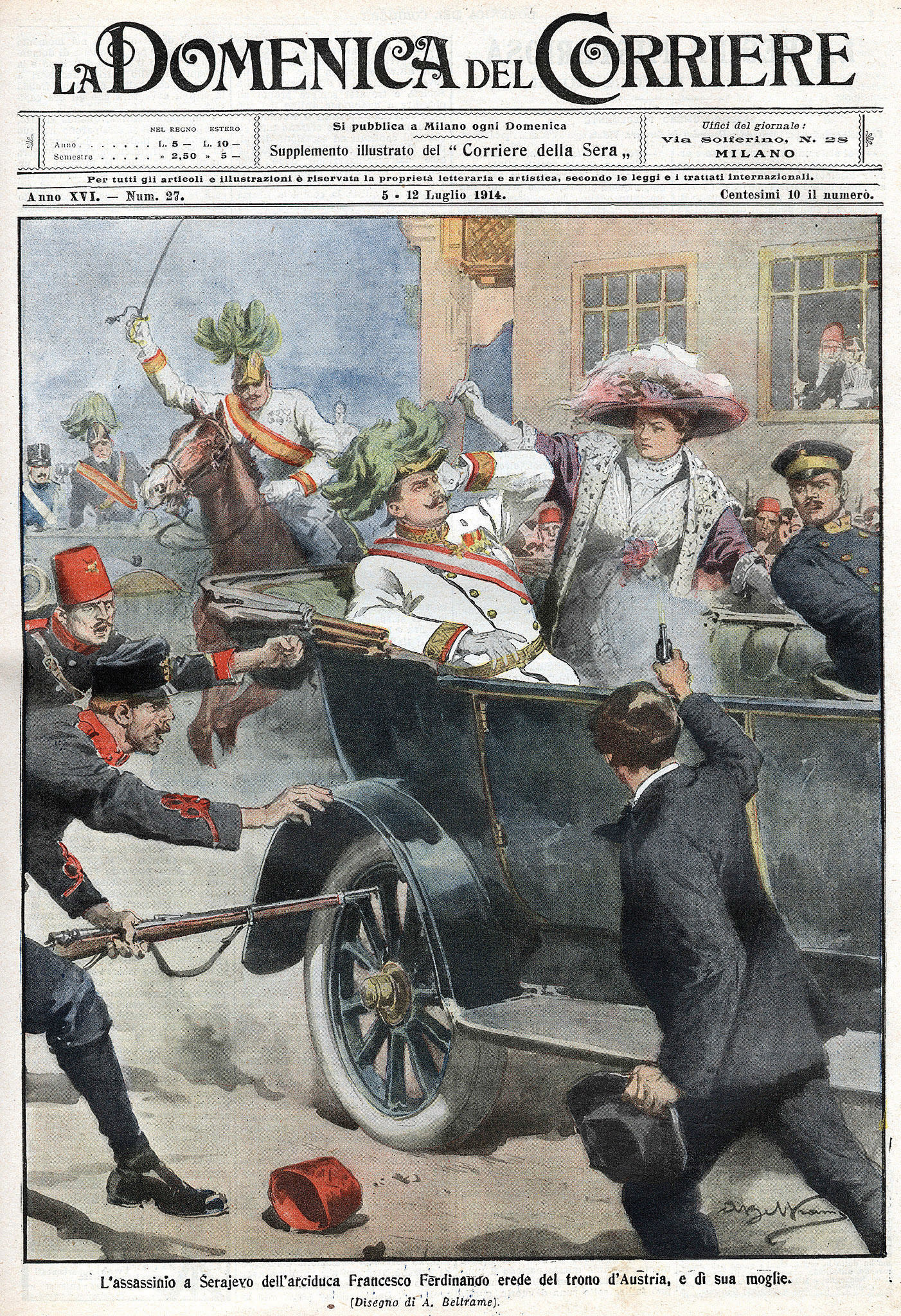
On 28 June 1914, Archduke Franz Ferdinand and his wife, Sophie, were assassinated in Sarajevo by Gavrilo Princip, a Bosnian Serb student. The event unfolded as the royal couple traveled through the city, their car winding through its streets. Princip, part of a revolutionary group, saw this as the moment to strike. The assassination was not random; it was a calculated act of defiance against Austro-Hungarian rule. The Archduke's death sent shockwaves through Europe, setting off a chain of events that would lead to war.
The assassination was the work of a group of six young men, all Austro-Hungarian citizens, who were members of the revolutionary movement later known as Young Bosnia. Their goal was to free Bosnia and Herzegovina from Austro-Hungarian rule and create a unified South Slav state. Princip, the one who fired the fatal shots, was not yet twenty years old. He had been inspired by earlier assassination attempts, including that of Bogdan Žerajić, who had tried to kill the Austrian governor of Bosnia and Herzegovina in 1910. Žerajić's daring became a symbol for future revolutionaries, including Princip.
The Young Bosnia movement was not the only force at play. The Black Hand, a Serbian secret nationalist group, had also been involved in the attack. Support came from Dragutin Dimitrijević, chief of the military intelligence section of the Serbian general staff, while Major Vojislav Tankosić provided the assassins with bombs and pistols and trained them in their use. The network's reach extended into Serbia, where it was aided by military officials and intelligence agents such as Rade Malobabić. Access to a clandestine web of safe-houses and agents helped coordinate the attack and ensure its execution, linking the local revolutionaries with the broader Serbian nationalist movement.
After the assassination, the world watched as tensions escalated. Austria-Hungary, seeing the attack as an act of Serbian aggression, issued an ultimatum to Serbia. When the ultimatum was partly rejected, war was declared. The assassination of the Archduke was the catalyst for World War I, a conflict that would claim millions of lives. The immediate consequences were the declaration of war by Austria-Hungary on Serbia and the involvement of other European powers.
The trial of the assassins and their accomplices took place in Sarajevo in October 1914. Twenty-five people were indicted, including the six attackers. Princip was found guilty of murder and high treason but, being too young to be executed, was sentenced to 20 years in prison. The four other captured attackers also received prison terms, while five of the older conspirators were sentenced to death. The trial revealed the extent of the conspiracy and the deep-seated nationalist sentiments that had driven the attack.
More from History

The Morning Bingham Climbed to Machu Picchu
On a cold July morning in 1911, an American historian scrambled up a jungle-choked ridge above the Urubamba River — and by afternoon, a forgotten Inca citadel would belong to the world.

The Last Half-Hour of the Hindenburg
It was already half a day late, and the public had been told to keep away — but at seven o'clock that evening, the Hindenburg finally turned toward its mooring mast for the last time.

The Last Hours of Pompeii: August 24, 79 AD
By noon it was just another hot day beside the Bay of Naples. By evening, an entire mountain had rewritten the fate of thousands.

The Longest Walk: Mandela's Last Steps to Freedom
After 27 years behind bars, a 71-year-old man had to relearn how to walk out of a prison gate — into a waiting world of cameras, crowds, and a country holding its breath.

The Document Lincoln Signed on the First Day of 1863
On a single January morning, a president's pen would change the legal status of more than three million people — if the ink held and his hand did not shake.

The Day of the Dream: August 28, 1963
Two hundred and fifty thousand people converged on the National Mall that morning — by nightfall, one voice from the steps of the Lincoln Memorial would echo for generations.