The Silent Pyramids of Peru
Long before the first stone of the Great Pyramid was cut, a nameless people were already raising monuments on the desert coast of Peru — and they left behind no pottery, no art, almost no trace of who they were.
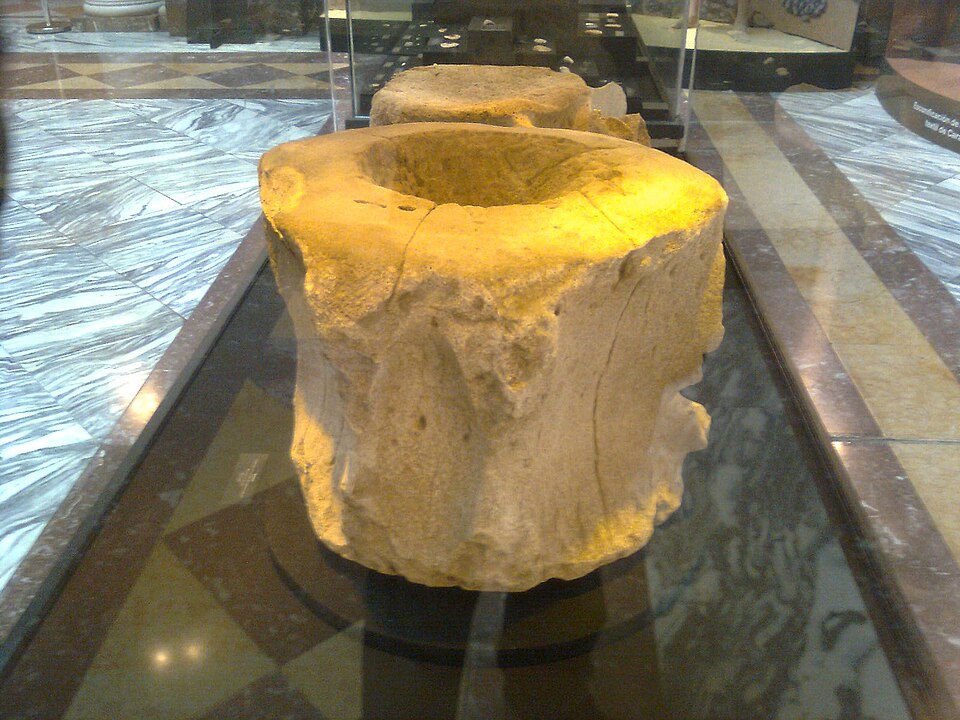
On the arid, wind-scoured coast of north-central Peru, roughly 150 to 200 kilometers north of Lima, a civilization rose in near-total silence around 3500 BCE. Archaeologists call it Caral–Supe, or Norte Chico, after the region where it flourished along three rivers: the Fortaleza, the Pativilca, and the Supe. Farther south, related sites cluster along the Huaura River as well. At its height this society included as many as thirty major population centers, packed into a coastal plain of just 1,800 square kilometers.
The scale of what they built is startling given how little else survives. Caral–Supe left large earthwork platform mounds and sunken circular plazas, monumental architecture on a scale that implies organized labor and sophisticated governance. Yet there is no pottery here, no ceramics of any kind, and no evidence of visual art has survived. It is, in archaeological terms, a pre-ceramic culture — one that built cities and mounds without ever making the pots that most ancient societies are known by.
The timing is what makes Caral–Supe extraordinary. Complex society here arose a millennium after Sumer in Mesopotamia, was contemporaneous with the Egyptian pyramids, and predated the Mesoamerican Olmecs by nearly two thousand years. It is now recognized as the oldest-known civilization in the New World, and as one of only six places on Earth where civilization is believed to have originated independently, without outside influence.
The earliest secure date tied to an actual city is around 3500 BCE, at Huaricanga in the Fortaleza area. From roughly 3200 BCE onward, large-scale settlement and communal construction become unmistakable in the archaeological record. Radiocarbon work by Jonathan Haas and colleagues even turned up one sample dating to 9210 BCE, hinting at scattered human presence long before cities existed, though the civilization itself took shape millennia later.// This apex of activity — with population and construction shifting decisively toward inland sites like Caral itself — occurred between roughly 2500 and 2000 BCE, even as coastal communities kept supplying fish and shellfish that inland residents depended on.
The city of Caral, in the Supe Valley, is the best-studied site and gives the wider civilization its name. Excavations there, led by Peruvian archaeologist Ruth Shady starting in the late 1990s, show habitation stretching from about 2627 BCE to 2020 BCE. Shady's work, along with a 2001 survey published in Science and a 2004 Nature article detailing fieldwork and radiocarbon dating across the region, finally revealed the full significance of what had been sitting largely unexamined for decades — archaeologists had actually noted sites in the area since at least the 1940s, with the coastal site of Aspero identified as early as 1905.
More from History

The Morning Bingham Climbed to Machu Picchu
On a cold July morning in 1911, an American historian scrambled up a jungle-choked ridge above the Urubamba River — and by afternoon, a forgotten Inca citadel would belong to the world.

The Last Half-Hour of the Hindenburg
It was already half a day late, and the public had been told to keep away — but at seven o'clock that evening, the Hindenburg finally turned toward its mooring mast for the last time.

The Last Hours of Pompeii: August 24, 79 AD
By noon it was just another hot day beside the Bay of Naples. By evening, an entire mountain had rewritten the fate of thousands.

The Longest Walk: Mandela's Last Steps to Freedom
After 27 years behind bars, a 71-year-old man had to relearn how to walk out of a prison gate — into a waiting world of cameras, crowds, and a country holding its breath.

The Document Lincoln Signed on the First Day of 1863
On a single January morning, a president's pen would change the legal status of more than three million people — if the ink held and his hand did not shake.

The Day of the Dream: August 28, 1963
Two hundred and fifty thousand people converged on the National Mall that morning — by nightfall, one voice from the steps of the Lincoln Memorial would echo for generations.