The Stone Ancestors of Rapa Nui
On the most remote inhabited spot on Earth, a Polynesian people carved 887 giant faces out of volcanic rock — then, for reasons still unknown, toppled every single one.
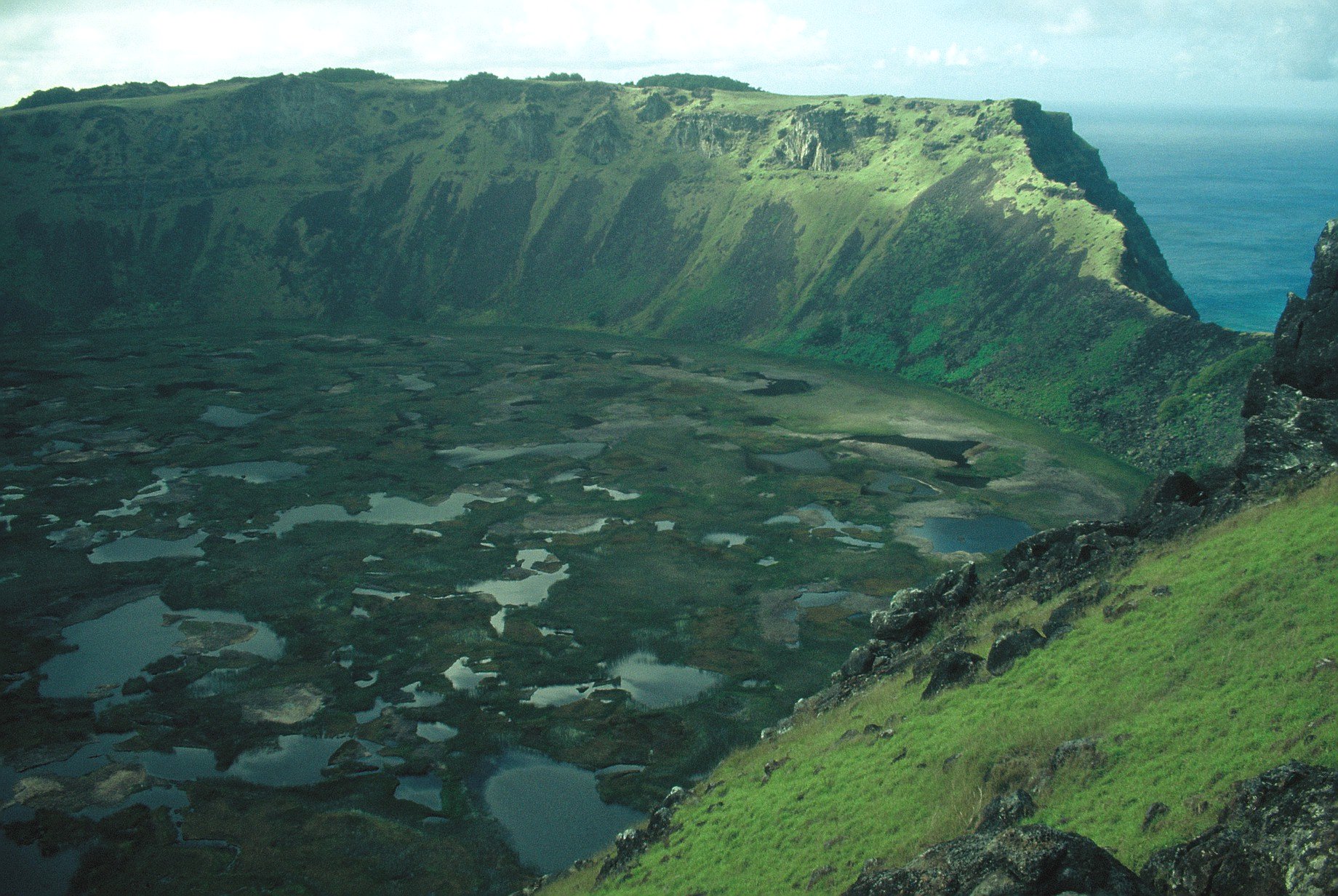
Far out in the southeastern Pacific, 3,700 kilometres from the Chilean coast and 2,200 kilometres from the nearest human habitation on Pitcairn Island, sits a small triangular island that its earliest inhabitants called Te Pito o Te Henua — the navel, or end, of the world. They knew it as Rapa Nui. The rest of the world would come to know it as Easter Island, a name given by the Dutch explorer Jacob Roggeveen, who became the first European to sight it on Easter Day in 1722. Roggeveen recorded that its inhabitants came in three distinct appearances — dark-skinned, red-skinned, and pale-skinned people with red hair — a detail that has puzzled observers ever since.
The island's Polynesian name arrived later, given by a Tahitian visitor who thought it resembled the island of Rapa, only bigger — nui meaning 'big' in Polynesian. In Chile it is still called Isla de Pascua. The Rapa Nui people themselves are believed to have settled the island sometime between 300 and 1200 CE, arriving as part of the great Polynesian migrations that pushed to the very eastern edge of the Polynesian Triangle.
What they left behind became one of the most extraordinary archaeological legacies on the planet: 887 monumental stone statues known as moai, ranging from 2 to 20 metres in height. Most were carved from a distinctive yellow-brown volcanic tuff found only at Rano Raraku, on the island's southeast side, though some were shaped from red scoria. The statues were erected on ceremonial platforms called ahu, typically built close to the coastline and running parallel to it — silent sentinels facing inland toward the communities that carved them. Many unfinished moai still lie in the quarry at Rano Raraku, frozen mid-creation.
The moai were not mere decoration. They represented a clan's most revered forebears, believed to bestow mana — spiritual power — upon the living leaders they watched over. The labor of quarrying, carving, transporting, and raising statues weighing many tons, using nothing but the tools and manpower of an isolated island society, remains one of history's great feats of collective will.
Yet sometime between 1837 and 1864, in a period whose causes remain unclear but were probably tied to tribal warfare, every standing moai on the island was toppled. Remarkably, most suffered little damage in the fall. It would take more than a century, and international restoration efforts beginning around 1950, to raise them again and return them to something like their original positions.
More from History

The Morning Bingham Climbed to Machu Picchu
On a cold July morning in 1911, an American historian scrambled up a jungle-choked ridge above the Urubamba River — and by afternoon, a forgotten Inca citadel would belong to the world.

The Last Half-Hour of the Hindenburg
It was already half a day late, and the public had been told to keep away — but at seven o'clock that evening, the Hindenburg finally turned toward its mooring mast for the last time.

The Last Hours of Pompeii: August 24, 79 AD
By noon it was just another hot day beside the Bay of Naples. By evening, an entire mountain had rewritten the fate of thousands.

The Longest Walk: Mandela's Last Steps to Freedom
After 27 years behind bars, a 71-year-old man had to relearn how to walk out of a prison gate — into a waiting world of cameras, crowds, and a country holding its breath.

The Document Lincoln Signed on the First Day of 1863
On a single January morning, a president's pen would change the legal status of more than three million people — if the ink held and his hand did not shake.

The Day of the Dream: August 28, 1963
Two hundred and fifty thousand people converged on the National Mall that morning — by nightfall, one voice from the steps of the Lincoln Memorial would echo for generations.