The Stone at the Center of the World
Near a vast Andean lake, at an altitude where crops should barely grow, a city of stone once housed tens of thousands — then vanished so completely that even its own name was lost.
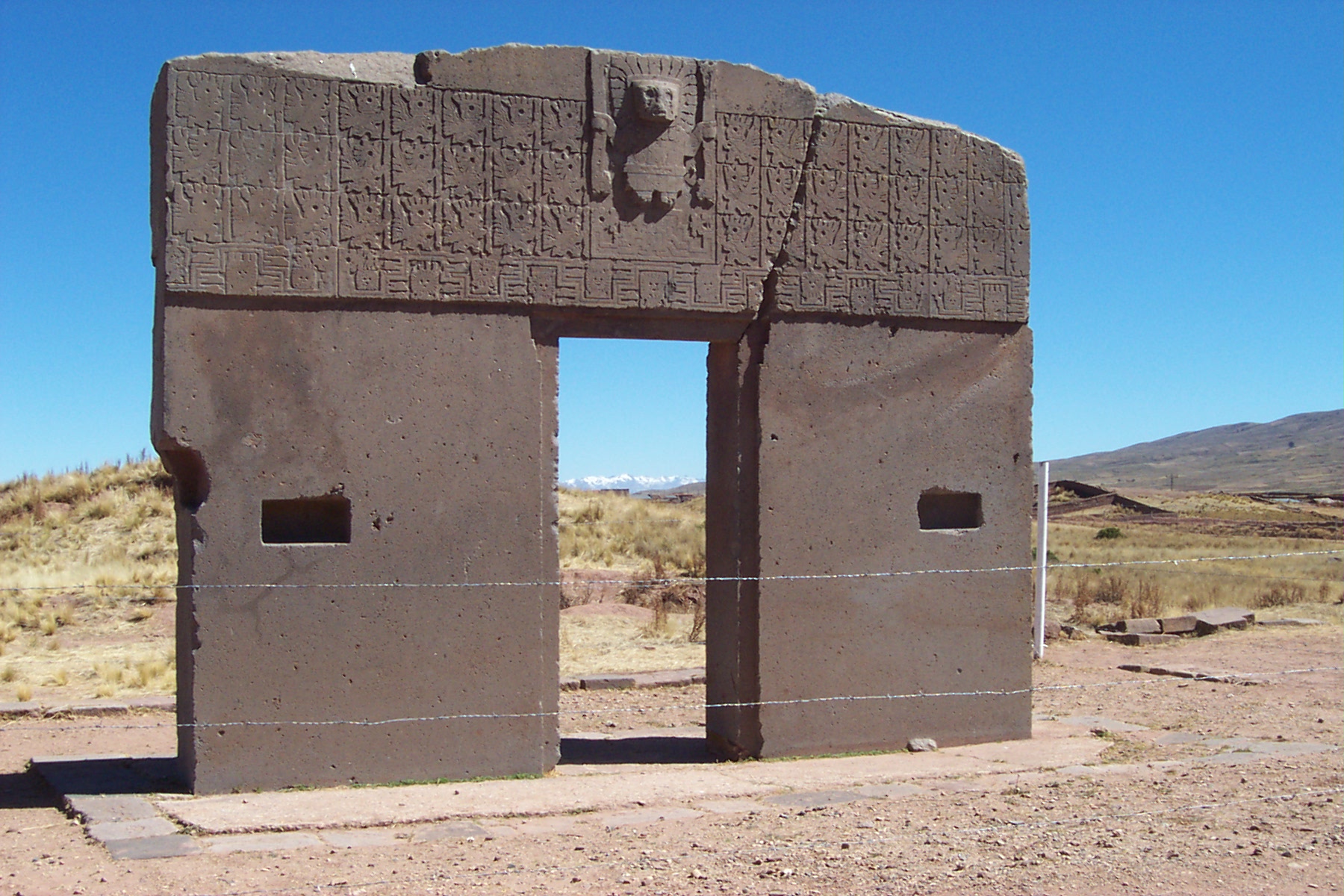
In 1549, the Spanish conquistador Pedro Cieza de León was searching for the lost southern Inca capital of Qullasuyu when he stumbled onto something far older: the ruins of Tiwanaku. What he found, about 70 kilometers from present-day La Paz in western Bolivia near Lake Titicaca, was one of the largest archaeological sites in South America — a sprawling complex of megalithic blocks, decorated ceramics, and monumental platforms covering some four square kilometers.
The people who built it left no written language, so their own name for the city has been lost to time. Bernabé Cobo, a Jesuit chronicler, recorded that the Aymara called it taypiqala — 'stone in the center' — reflecting a belief that Tiwanaku sat at the center of the world. Linguists such as Heggarty and Beresford-Jones suspect the language actually spoken there was Puquina, now extinct.
Dating the site has been a long and contentious process. In the early twentieth century, Arthur Posnansky argued Tiwanaku was 11,000 to 17,000 years old, based on astronomical alignments. Later, Carlos Ponce Sanginés pushed for an origin around 1580 BC. Modern radiocarbon analysis has overturned both claims: the consensus now places the site's founding around AD 110, with no ceramic evidence of anything earlier.
From roughly AD 375 to 700, Tiwanaku grew into a true Andean city, its population estimated conservatively at 10,000 to 20,000 people by AD 800. This growth rested on a complex agropastoral economy reinforced by trade networks stretching across the altiplano. The society had little in the way of markets; instead, elites redistributed resources among specialized workers — herders, agriculturists, artisans in pottery, jewelry, and textiles — creating a stratified but interdependent economy.
Tiwanaku's power in the Titicaca basin peaked between AD 500 and 600, and its people shared a visual language — the 'Southern Andean Iconographic Series' — with the Wari culture, suggesting a relationship built on trade, rivalry, or both. Centuries later, the Inca built structures echoing Tiwanaku's architecture, hinting that they drew inspiration from this earlier civilization even after it had fallen silent.
More from History

The Morning Bingham Climbed to Machu Picchu
On a cold July morning in 1911, an American historian scrambled up a jungle-choked ridge above the Urubamba River — and by afternoon, a forgotten Inca citadel would belong to the world.

The Last Half-Hour of the Hindenburg
It was already half a day late, and the public had been told to keep away — but at seven o'clock that evening, the Hindenburg finally turned toward its mooring mast for the last time.

The Last Hours of Pompeii: August 24, 79 AD
By noon it was just another hot day beside the Bay of Naples. By evening, an entire mountain had rewritten the fate of thousands.

The Longest Walk: Mandela's Last Steps to Freedom
After 27 years behind bars, a 71-year-old man had to relearn how to walk out of a prison gate — into a waiting world of cameras, crowds, and a country holding its breath.

The Document Lincoln Signed on the First Day of 1863
On a single January morning, a president's pen would change the legal status of more than three million people — if the ink held and his hand did not shake.

The Day of the Dream: August 28, 1963
Two hundred and fifty thousand people converged on the National Mall that morning — by nightfall, one voice from the steps of the Lincoln Memorial would echo for generations.