The Toltecs: Ancestors the Aztecs Invented and Remembered
Long after their city burned, a people who called themselves civilization's masters were still being claimed as ancestors by kings who never met them — including the Aztecs themselves.
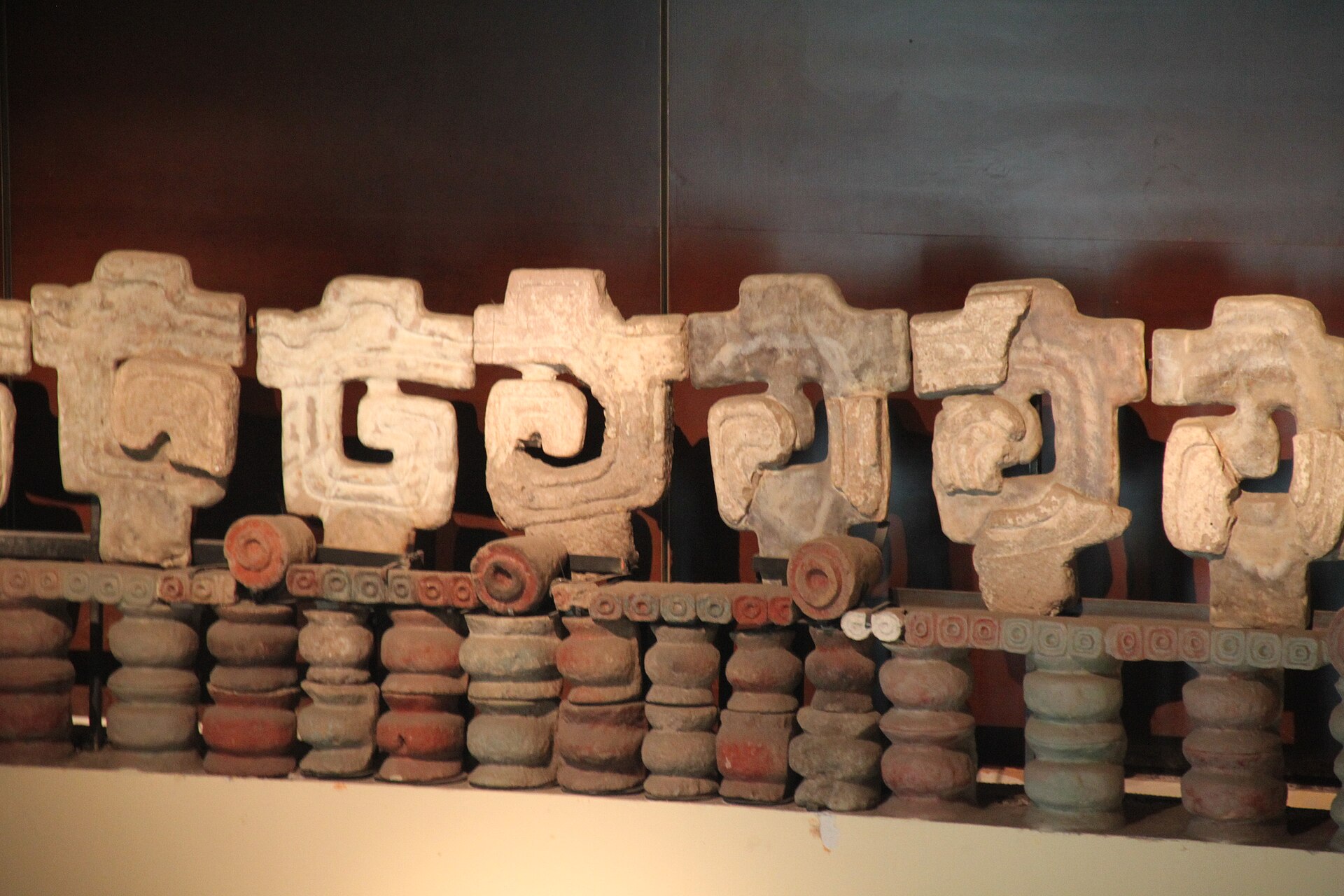
When Aztec rulers looked back for legitimacy, they did not point to conquest or bloodline alone — they pointed to Tula. In the Nahuatl language, the word Toltec came to mean 'artisan,' and for the Aztecs, the ruins of this vanished culture represented the very epitome of civilization. Almost every ruling lineage in Mexico, the Aztecs included, tried to trace itself back to these people who had built and then abandoned a city roughly 80 kilometers from modern Mexico City.
The Toltec state rose to prominence between 950 and 1150 AD, centered on Tula, in what is now the Mexican state of Hidalgo. Its origins were mixed: a fusion of Nonoalca people from the southern Gulf Coast, shaped by Mayan influence, and sedentary Chichimeca from the north. These groups had once been tightly woven into the political and economic orbit of Teotihuacan, forming large settlements like Villagran and Chingu — but when Teotihuacan collapsed around 650 AD, those settlements emptied, and a new culture, the Coyotlatelco, rose in their place.
It was the Coyotlatelco who founded the earliest Tula — now called Tula Chico — alongside a scatter of hilltop communities. This first city grew into a compact regional state, three to six square kilometers, laid out on a grid, with a main plaza far more elaborate than anything else nearby: multiple ball courts, several pyramids. Then, at the close of the Epiclassic period, Tula Chico was burned and abandoned. A new city, Tula Grande, rose 1.5 kilometers south, echoing its predecessor's design — and it was this second city that became the dominant force of the region in the Early Postclassic.
At its peak, Tula Grande may have housed as many as 60,000 people spread across 16 square kilometers of hills, plains, valleys, and marsh. Its skyline held pyramids, ball courts, and — most famously — towering Atlantean stone figures standing atop Pyramid B, 4.6 meters tall, feathered headdresses, spears in hand. Some scholars connect these figures to Quetzalcoatl, the feathered serpent, a deity sometimes merged in memory with actual Toltec rulers or with the morning star itself.
Remarkably similar architectural motifs and stone columns appear far away, at Chichén Itzá in Yucatán — a resemblance that has fueled one of Mesoamerican archaeology's longest-running debates. Did the Toltecs conquer the Maya city? Did Chichén Itzá's people establish Tula as an outpost of their own? Or did the two simply share loose cultural contact across a wide network? No consensus has emerged. What is clear is that Tula participated in extensive trade — a large obsidian workshop uncovered at the site attests to it — and that Toltec ceramic styles have turned up as far away as Costa Rica.
More from History

The Morning Bingham Climbed to Machu Picchu
On a cold July morning in 1911, an American historian scrambled up a jungle-choked ridge above the Urubamba River — and by afternoon, a forgotten Inca citadel would belong to the world.

The Last Half-Hour of the Hindenburg
It was already half a day late, and the public had been told to keep away — but at seven o'clock that evening, the Hindenburg finally turned toward its mooring mast for the last time.

The Last Hours of Pompeii: August 24, 79 AD
By noon it was just another hot day beside the Bay of Naples. By evening, an entire mountain had rewritten the fate of thousands.

The Longest Walk: Mandela's Last Steps to Freedom
After 27 years behind bars, a 71-year-old man had to relearn how to walk out of a prison gate — into a waiting world of cameras, crowds, and a country holding its breath.

The Document Lincoln Signed on the First Day of 1863
On a single January morning, a president's pen would change the legal status of more than three million people — if the ink held and his hand did not shake.

The Day of the Dream: August 28, 1963
Two hundred and fifty thousand people converged on the National Mall that morning — by nightfall, one voice from the steps of the Lincoln Memorial would echo for generations.