The Treaty That Never Lived
On an August afternoon in a French porcelain factory, a handful of signatures tried to erase an empire from the map. The empire refused to disappear quietly.
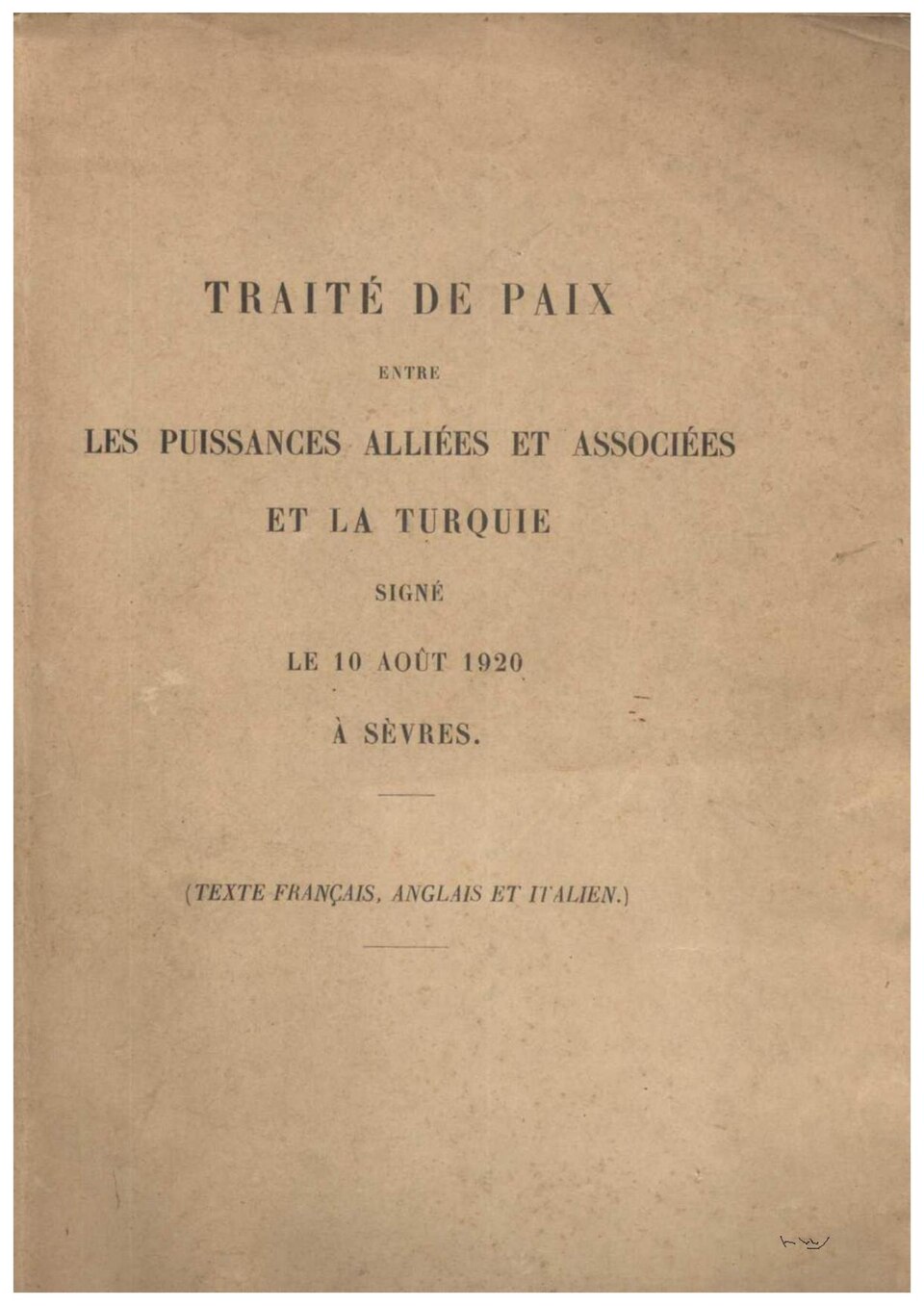
On 10 August 1920, in an exhibition room of the Manufacture nationale de Sèvres, just outside Paris, representatives of the Allied Powers and the Ottoman Empire signed a treaty that would have carved the empire into pieces. It was one of a series of postwar settlements imposed on the defeated Central Powers, following the Armistice of Mudros that had already ended the fighting. But unlike its counterparts, this particular treaty would never truly take effect.
The terms had been drafted at the San Remo Conference that April, and the Ottoman government was given barely a month to respond. Former Grand Vizier Tevfik Pasha called the draft 'incompatible with the concepts of independence and even statehood,' yet a commission was formed to suggest edits. The Allies dismissed nearly all of them, granting only ten days for a final answer. Istanbul's press, largely sympathetic to the Sublime Porte, concluded there was no alternative but acceptance.
Sultan Mehmed VI convened a Sultanate Council on 22 July 1920 to share the burden of the decision. Only 57 delegates were invited this time, far fewer than the 131 who had gathered after the Greek landing at Smyrna the year before, and figures linked to the Turkish National Movement or the Committee of Union and Progress were deliberately excluded. Grand Vizier Damat Ferid Pasha addressed the council, blaming a decade of catastrophic decisions by the Committee of Union and Progress for the empire's plight, but insisting that Istanbul remained in Turkish hands only because of Allied trust in the Sultan. The vote was nearly unanimous; only artillery general Rıza Pasha abstained.
Three Ottoman officials affixed their names to the document: former General Staff officer Hadi Pasha, Council of State president Rıza Tevfik Bölükbaşı, and Reşat Halis, second secretary of the Ottoman embassy in Bern. For the Allies, George Dixon Grahame signed for Britain, Alexandre Millerand for France, and Count Lelio Longare for Italy. Damat Ferid Pasha was present at the negotiations but did not sign. Notably, Greece — one of the powers meant to gain territory — never ratified the treaty at all, having undergone a political upheaval in its 1920 legislative elections.
The treaty stripped the empire of nearly all lands not inhabited by Turks, handing vast zones to French and British administration. New polities emerged from its clauses, including the British Mandate for Palestine and the French Mandate for Syria and Lebanon. Russia, having already settled matters with the Ottomans through the 1918 Treaty of Brest-Litovsk, was no party to it. The United States, after its Senate refused to accept a League of Nations mandate over Armenia, also stayed out of the partition entirely.
More from History

The Morning Bingham Climbed to Machu Picchu
On a cold July morning in 1911, an American historian scrambled up a jungle-choked ridge above the Urubamba River — and by afternoon, a forgotten Inca citadel would belong to the world.

The Last Half-Hour of the Hindenburg
It was already half a day late, and the public had been told to keep away — but at seven o'clock that evening, the Hindenburg finally turned toward its mooring mast for the last time.

The Last Hours of Pompeii: August 24, 79 AD
By noon it was just another hot day beside the Bay of Naples. By evening, an entire mountain had rewritten the fate of thousands.

The Longest Walk: Mandela's Last Steps to Freedom
After 27 years behind bars, a 71-year-old man had to relearn how to walk out of a prison gate — into a waiting world of cameras, crowds, and a country holding its breath.

The Document Lincoln Signed on the First Day of 1863
On a single January morning, a president's pen would change the legal status of more than three million people — if the ink held and his hand did not shake.

The Day of the Dream: August 28, 1963
Two hundred and fifty thousand people converged on the National Mall that morning — by nightfall, one voice from the steps of the Lincoln Memorial would echo for generations.