The Valley That Buried an Empire
French paratroopers dropped into a remote valley believing the enemy had no artillery capable of reaching them. They were catastrophically wrong.
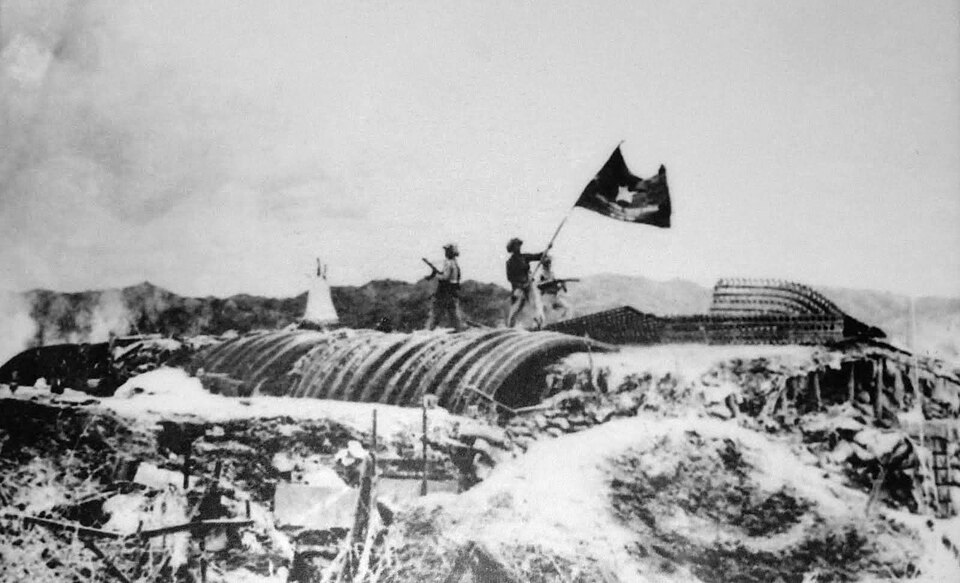
In the autumn of 1953, French Union forces began pouring into a remote valley in northwest Tonkin called Điện Biên Phủ, deep inside the autonomous Tai Federation. The operation had a clear purpose: cut the Viet Minh supply lines feeding into neighboring Laos, and lure General Võ Nguyên Giáp's forces into a decisive confrontation that would cripple them once and for all. The French chose to build an isolated but heavily fortified camp, resupplied entirely by air, confident in one crucial assumption — that the Viet Minh possessed no meaningful anti-aircraft capability.
This strategy did not emerge from nowhere. It grew from the 'hedgehog' concept devised by Colonel Louis Berteil, commander of Mobile Group 7 and chief strategist to French commander Henri Navarre, based on the earlier Battle of Nà Sản, where a similarly isolated air-supplied French base had repelled Giáp's assaults with heavy losses to the attackers. Navarre had been named in May 1953 to succeed General Raoul Salan, the latest in a line of commanders who had failed to suppress the Viet Minh insurgency, and he believed that repeating the Nà Sản formula on a grander scale would finally let superior French artillery, armor, and air power annihilate an exposed enemy force.
Giáp, however, had other plans. Rather than launching the hoped-for suicidal frontal assault, his forces surrounded Điện Biên Phủ and began the immense labor of dragging heavy artillery — including anti-aircraft guns — through brutal mountain terrain to the rear slopes overlooking the French camp. Vietnamese soldiers dug elaborate tunnel networks, complete with front terraces from which cannons could be wheeled out, fired, and pulled back into cover before French counter-battery fire could respond.
When the bombardment began in March 1954, it caught the French entirely off guard. The Viet Minh's dug-in artillery positions proved almost impossible to knock out, and what followed was grinding, trench-style combat reminiscent of the First World War. French troops fought fiercely, repelling wave after wave of assaults even as supplies and reinforcements continued arriving by air.
But the perimeter could not hold forever. As key strongpoints fell one by one, the defensive ring contracted. Aircraft were shot down, runways destroyed, and the aerial lifeline the French had staked everything on simply stopped functioning. Despite substantial American aid, the situation became untenable.
More from History

The Morning Bingham Climbed to Machu Picchu
On a cold July morning in 1911, an American historian scrambled up a jungle-choked ridge above the Urubamba River — and by afternoon, a forgotten Inca citadel would belong to the world.

The Last Half-Hour of the Hindenburg
It was already half a day late, and the public had been told to keep away — but at seven o'clock that evening, the Hindenburg finally turned toward its mooring mast for the last time.

The Last Hours of Pompeii: August 24, 79 AD
By noon it was just another hot day beside the Bay of Naples. By evening, an entire mountain had rewritten the fate of thousands.

The Longest Walk: Mandela's Last Steps to Freedom
After 27 years behind bars, a 71-year-old man had to relearn how to walk out of a prison gate — into a waiting world of cameras, crowds, and a country holding its breath.

The Document Lincoln Signed on the First Day of 1863
On a single January morning, a president's pen would change the legal status of more than three million people — if the ink held and his hand did not shake.

The Day of the Dream: August 28, 1963
Two hundred and fifty thousand people converged on the National Mall that morning — by nightfall, one voice from the steps of the Lincoln Memorial would echo for generations.