Twelve Million Nine Hundred Thousand Shares: The Hour Wall Street Broke
By mid-morning the ticker was already an hour behind the shouting. No one on the floor could say anymore what anything was actually worth.
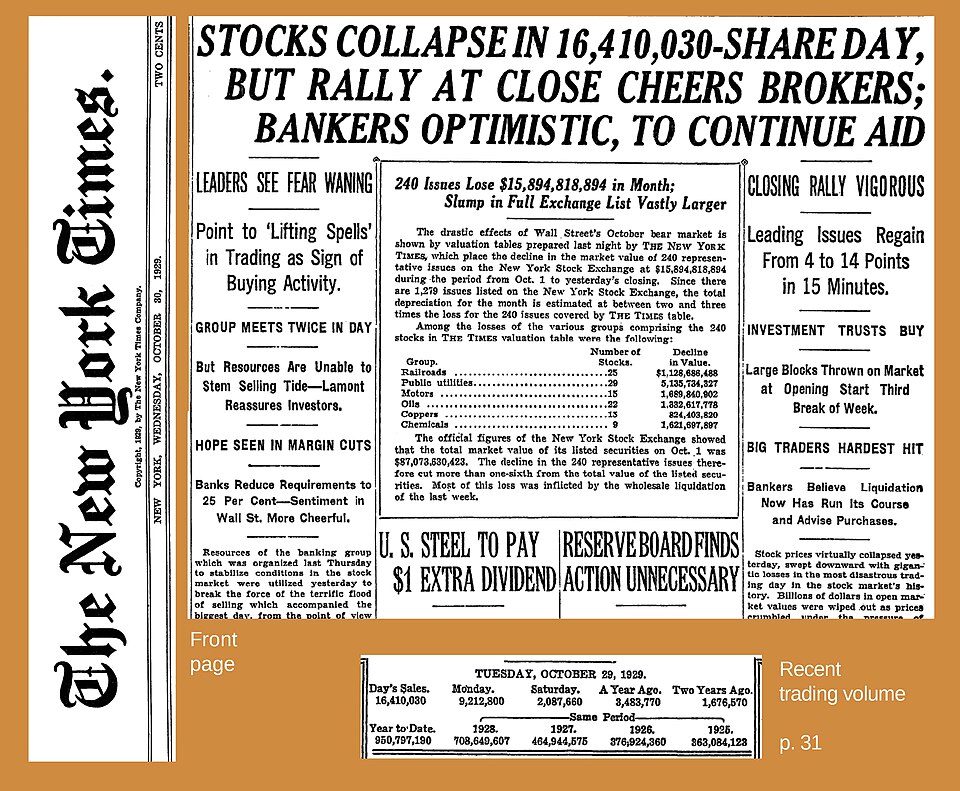
The morning of October 24, 1929 opened on a New York Stock Exchange already jittery from weeks of instability. Prices had wobbled through September, spooked by warnings from economist Roger Babson and the collapse of British financier Clarence Hatry's empire, but the Dow had still stood near its highs. As trading began that Thursday, the first sell orders came in heavier than usual, and within the opening hour prices began sliding across the board.
By mid-morning the slide had become a stampede. Brokers on the floor were shouting sell orders faster than the ticker tape machine could print them, and the tape soon ran an hour or more behind the actual trades. Investors and spectators crowding outside the Exchange on Broad Street had no accurate idea of prices at all — only the roar from inside telling them something was badly wrong.
As panic spread through the morning, shares that had commanded high prices just weeks earlier were being dumped for whatever bids could be found. Small investors who had bought on margin, borrowing to buy stock with only a fraction of the price down, were being wiped out as their brokers demanded more cash or simply sold them out.
Around noon, a group of the era's most powerful bankers moved to intervene. Led by figures at the major banking houses, they pooled funds in a strategy reminiscent of the one used to stem the Panic of 1907, aiming to buy stock at prices above the panicked market rate to project confidence.
The most visible of these moves came when Richard Whitney, acting as a floor broker for the bankers' pool, walked onto the floor of the Exchange and placed conspicuous buy orders for major stocks like U.S. Steel at prices well above the current market — a calculated, public show of confidence meant to be seen by everyone on the floor.
More from History

The Morning Bingham Climbed to Machu Picchu
On a cold July morning in 1911, an American historian scrambled up a jungle-choked ridge above the Urubamba River — and by afternoon, a forgotten Inca citadel would belong to the world.

The Last Half-Hour of the Hindenburg
It was already half a day late, and the public had been told to keep away — but at seven o'clock that evening, the Hindenburg finally turned toward its mooring mast for the last time.

The Last Hours of Pompeii: August 24, 79 AD
By noon it was just another hot day beside the Bay of Naples. By evening, an entire mountain had rewritten the fate of thousands.

The Longest Walk: Mandela's Last Steps to Freedom
After 27 years behind bars, a 71-year-old man had to relearn how to walk out of a prison gate — into a waiting world of cameras, crowds, and a country holding its breath.

The Document Lincoln Signed on the First Day of 1863
On a single January morning, a president's pen would change the legal status of more than three million people — if the ink held and his hand did not shake.

The Day of the Dream: August 28, 1963
Two hundred and fifty thousand people converged on the National Mall that morning — by nightfall, one voice from the steps of the Lincoln Memorial would echo for generations.