When the Ottoman Sultan Was Taken Captive: The Battle of Ankara
An emperor who had humbled crusader knights broke camp under a scorching sun to face a rival he had insulted in a letter — by nightfall, he would be in chains.
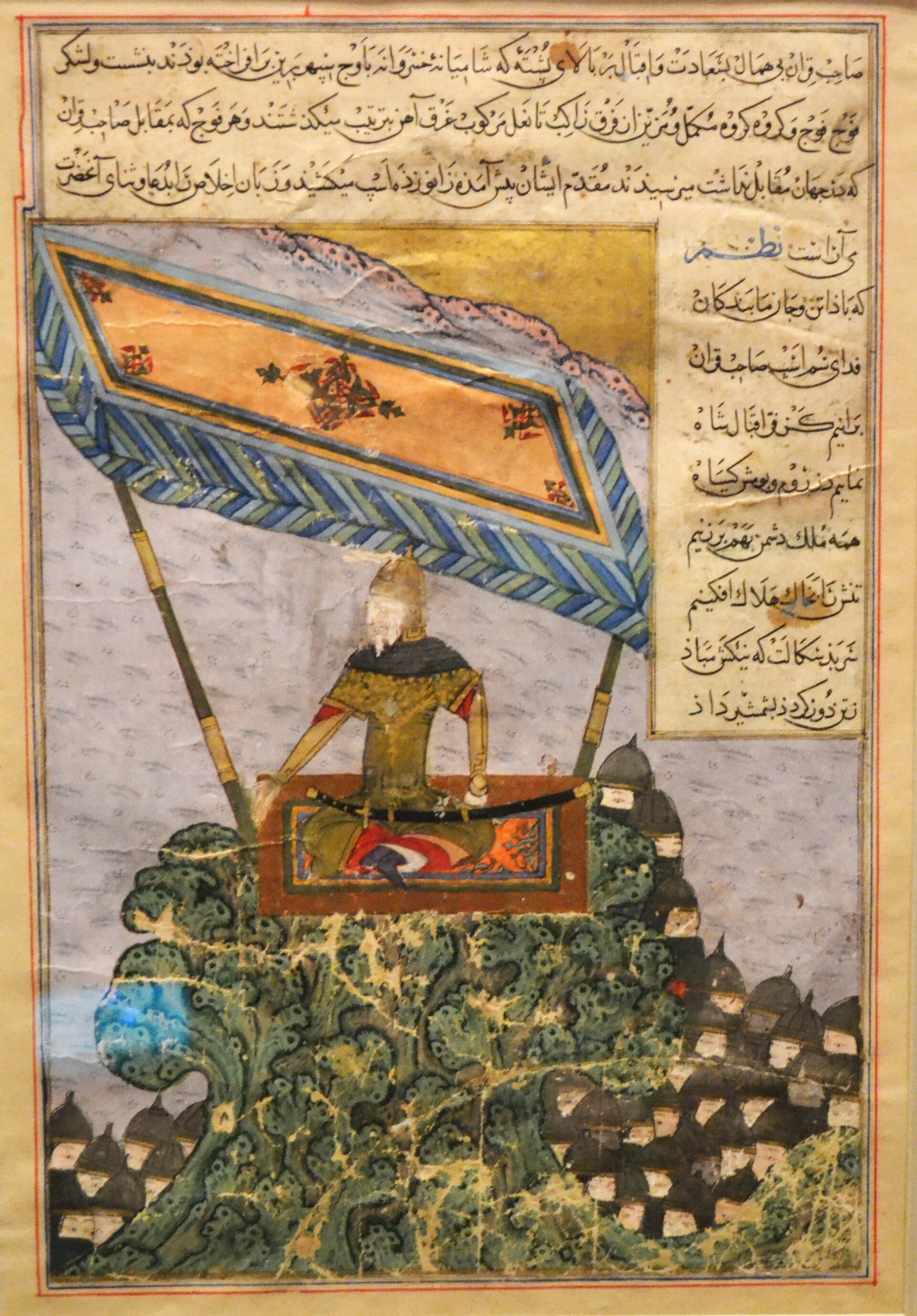
On 28 July 1402, two vast armies faced each other on the Çubuk plain near Ankara. One belonged to Bayezid I, the Ottoman sultan who had crushed a European crusader army at Nicopolis in 1396 and had been besieging Constantinople itself. The other belonged to Timur, the Turco-Mongol conqueror from Transoxiana who, in the years before this confrontation, had ravaged southern Russia and Ukraine (1395-96) and sacked Delhi (1398), building an empire stretching from Persia to the Caucasus.
The two rulers had no ancient quarrel, but pride lit the fuse. Bayezid demanded tribute from an emir loyal to Timur, an act Timur treated as personal insult. Between 1400 and 1401, Timur seized Sivas from the Ottomans and parts of Syria from the Mamluks, then turned toward Anatolia. Bayezid, meanwhile, was busy blockading Constantinople in Europe. When Timur pushed southeast in the summer of 1402, Bayezid broke off the siege and marched his army through brutal midsummer heat to meet him at Ankara.
The numbers, even by conservative modern estimates, were staggering: roughly 140,000 men under Timur against no more than 85,000 under Bayezid, whose force included 32 war elephants, Janissaries, Anatolian vassals, and Balkan Christian contingents — Serbians under Stefan Lazarević, Albanians including Gjon Kastrioti, and others. A quarter of Bayezid's troops were recently conquered Tatars, whose loyalty would prove fatal.
Bayezid's generals urged a defensive stand, luring Timur's forces into the mountains where summer heat would grind them down. Bayezid chose instead to march east in search of the enemy — only to find nothing. Timur's army had slipped southwest, resting in the very camps the Ottomans had just abandoned, using their tents and water sources. By the time the exhausted, thirsty Ottomans reached Ankara, Timur had already outmaneuvered them, and had diverted the Çubuk creek, the shared water supply, into a reservoir, leaving Bayezid's army parched.
When battle came, Timurid horse archers loosed devastating volleys into the Ottoman ranks. Stefan Lazarević's Serbian knights, clad in heavy black plate armor that Timur himself reportedly admired, fought like lions, cutting through Mongol lines three times and pleading with Bayezid to escape with them. He refused each time, though the Serbians did manage to save one of his sons and the treasury, escaping to Constantinople. Meanwhile the Black Tatars, and then the Anatolian beyliks' cavalry, deserted Bayezid mid-battle and joined Timur's side, shattering the Ottoman formation.
More from History

The Morning Bingham Climbed to Machu Picchu
On a cold July morning in 1911, an American historian scrambled up a jungle-choked ridge above the Urubamba River — and by afternoon, a forgotten Inca citadel would belong to the world.

The Last Half-Hour of the Hindenburg
It was already half a day late, and the public had been told to keep away — but at seven o'clock that evening, the Hindenburg finally turned toward its mooring mast for the last time.

The Last Hours of Pompeii: August 24, 79 AD
By noon it was just another hot day beside the Bay of Naples. By evening, an entire mountain had rewritten the fate of thousands.

The Longest Walk: Mandela's Last Steps to Freedom
After 27 years behind bars, a 71-year-old man had to relearn how to walk out of a prison gate — into a waiting world of cameras, crowds, and a country holding its breath.

The Document Lincoln Signed on the First Day of 1863
On a single January morning, a president's pen would change the legal status of more than three million people — if the ink held and his hand did not shake.

The Day of the Dream: August 28, 1963
Two hundred and fifty thousand people converged on the National Mall that morning — by nightfall, one voice from the steps of the Lincoln Memorial would echo for generations.